

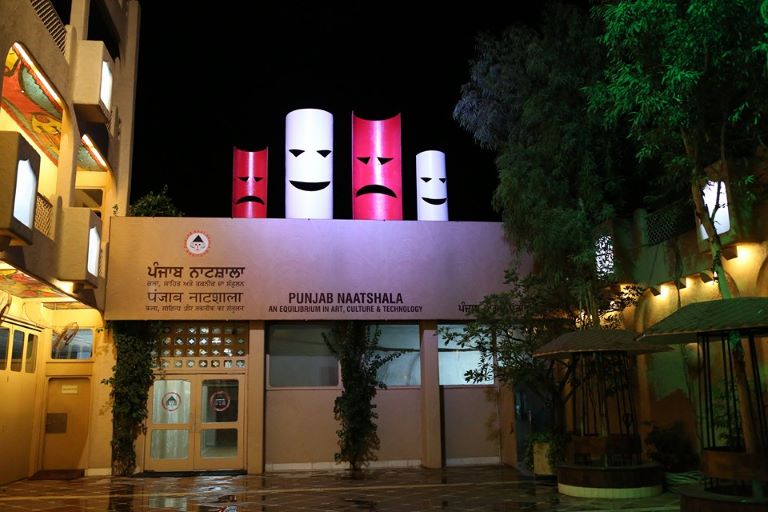
On most evenings, the gate opposite Khalsa College on the GT Road opened into a space that no longer resembled its past. What had once been a factory floor for harvesting equipment now held rows of seats facing a stage. The stage could revolve. The roof above it could be drawn back with a remote control, turning the auditorium into an open-air venue. Punjab Naatshala did not disguise its mechanics; it used them. The space became a centre for Punjabi theatre in Amritsar.
From Engineering to Theatre
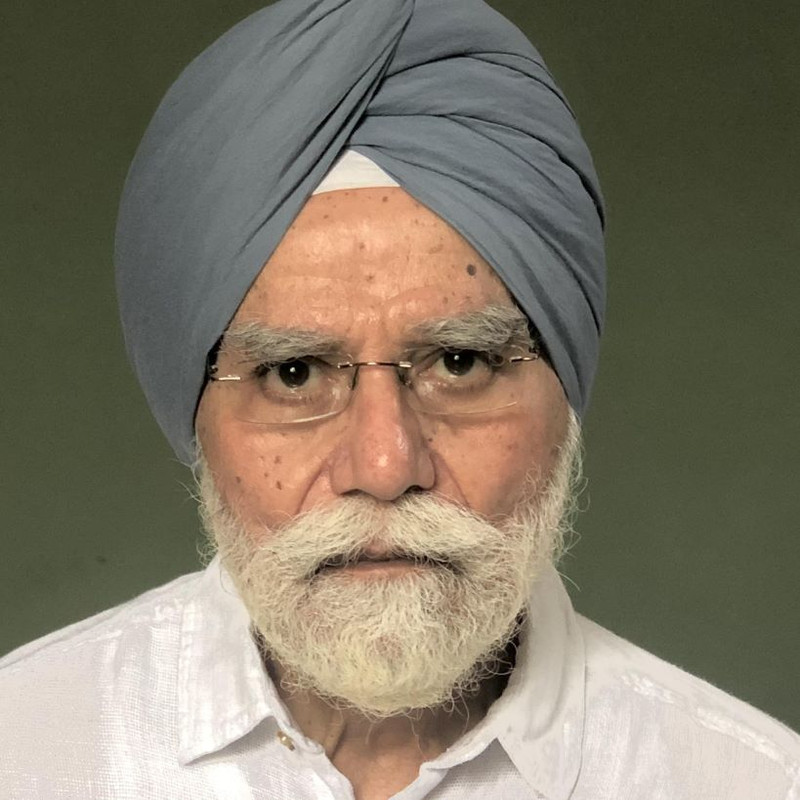
S. Jatinder Brar was often present there, not as an announced figure but as part of the working arrangement. Trained as a mechanical engineer, he returned to Amritsar, Punjab, in 1998 and committed himself to theatre. He had completed his studies in 1968 and spent much of his working life inside factories and foundries. Theatre had entered earlier, during his college years, where he participated in productions alongside his technical education. Performing arts remained secondary to engineering work. At the time, these were occasional engagements, not a profession. Engineering was.
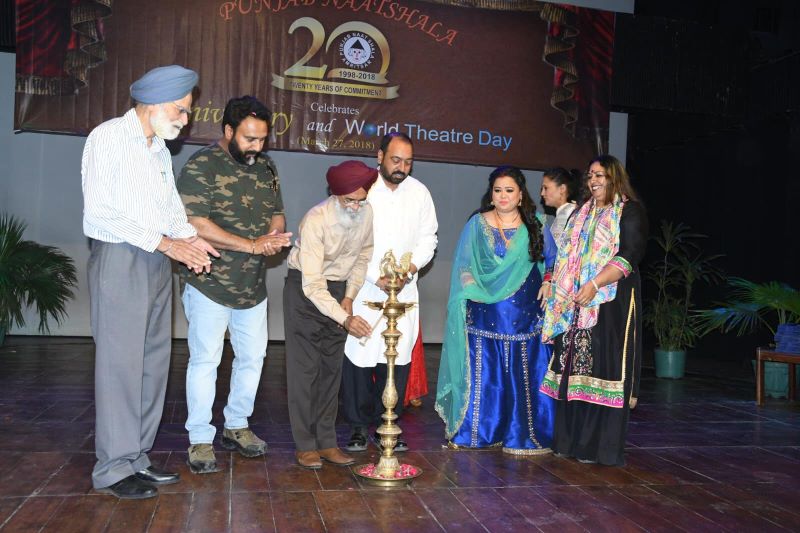
On March 27, 1998, World Theatre Day, Punjab Naatshala opened to the public. Brar set aside 2,250 square yards for the space. Its features were specific rather than decorative: adaptable lighting, advanced sound, a revolving stage, and an auditorium that could change shape rather than remain fixed.
Factory Floor to Stage
Industrial work placed him inside systems organised around output, labour, and efficiency. One factory employed hundreds of workers, including migrant labourers. The work was physically demanding, poorly organised, and tightly controlled. Brar observed the conditions closely, not as an outsider but as part of the operational structure: drawing layouts, redesigning processes, reducing manpower through mechanisation. This material would enter his playwriting later.
The consequences of that work became visible. When production systems changed, workers saw their numbers shrink. Tensions followed. These experiences stayed with him. He discussed them with Gursharan Singh, whom he regarded as his guru. The suggestion was practical: if theatre mattered to him, he could write from what he knew.
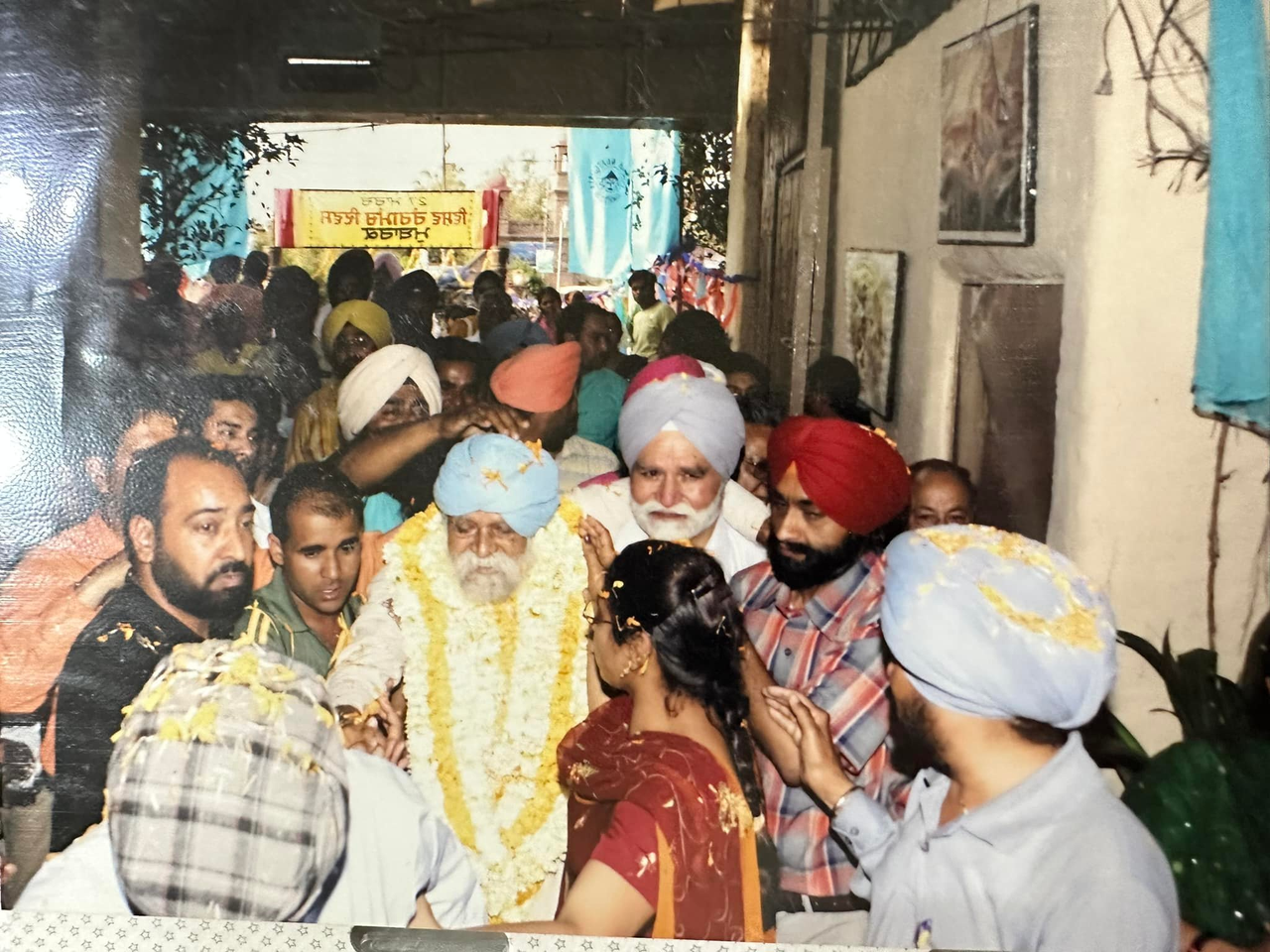
That process led to Lohe Di Bhathi. The play drew directly from factory life: labour relations, mechanisation, displacement, and strain. Factory workers became its central figures. The setting was specific, but the material travelled. The play was staged in multiple locations, shifting form without losing its core. It addressed conditions not limited to one factory or one city. The work established his position in Punjabi theatre. Stage productions could address industrial life directly.
Punjabi Naatshala Takes Shape
When Brar later converted his own factory into a theatre, the approach remained functional rather than symbolic. Punjab Naatshala began in 1998 as an open-air venue. It became a professional theatre space in Amritsar. Over time, it developed into a fully equipped professional theatre. Technical design was treated as essential: lighting, sound, stage movement, and spatial flexibility. The roof could be opened when required. The industrial character of the building remained visible. It was one of the few professional theatre venues in Punjab with a rotating stage and open-air performance capability.
Brar’s presence showed most clearly in how the space functioned: how scenes shifted, how sound travelled, how light marked entrances and exits.
A Working Theatre
The theatre operated through routine. Shows were staged on weekends. Performances were staged regularly rather than occasionally. Entry was ticketed. Rehearsals followed fixed schedules. Audiences arrived with familiarity rather than ceremony. Punjabi plays were rehearsed, staged, and run with regularity.
Over the years, more than three thousand plays were staged at the venue. The venue became a hub for theatre training and cultural exchange. Artists from more than two dozen countries performed there, subject to travel permissions and political conditions. At certain periods, cross-border movement involved procedural requirements: police reporting, formal clearances, which reduced the frequency of visits.
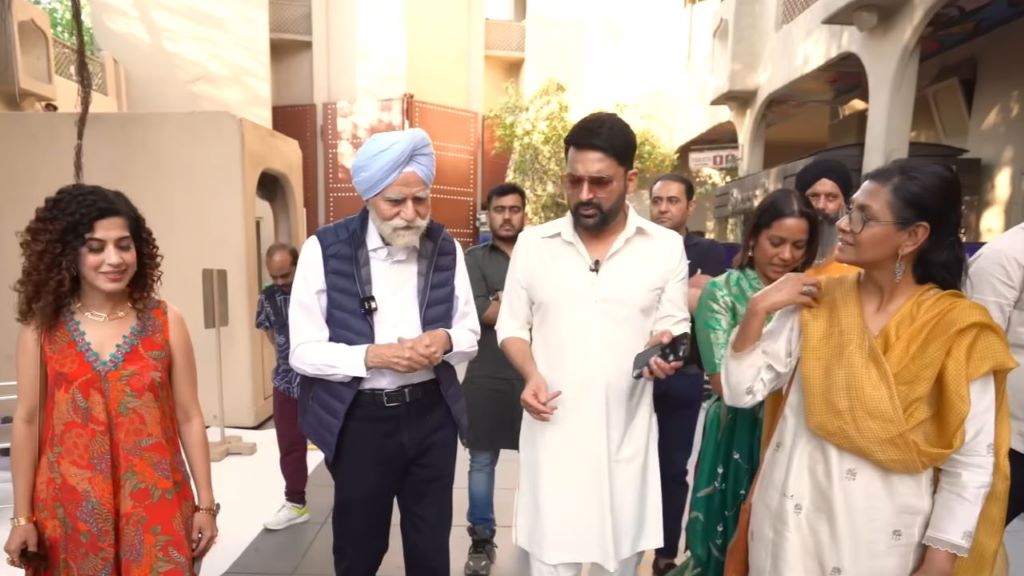
Kapil Sharma and Bharti Singh revisit Naatshala
Actors passed through early in their careers. Kapil Sharma performed his first professional play on that stage. Bharti Singh appeared in Faasle as a comic wife, a role remembered by regular audiences. She performed in the play for over a hundred shows. Rajiv Thakur, Chandan Prabhakar, Neha Dyal, Anita Devgan, and Hardeep Gill were among those who worked there before moving on to other platforms. When Kapil Sharma returned for a visit in 2024, he was filmed embracing Brar; the moment circulated without commentary. Other actors passed through productions, some briefly, some across extended runs.
Writing remained central to Brar’s work. He had begun staging plays during his college years and continued alongside managing the theatre. His work as a theatre director and playwright continued alongside managing the venue. His full-length plays included Lohe Di Bhathi, Faasle, Kudedan Ki Jaai, Kadessan, Paydan, Mirch Masala, and Saka Jallianwala Bagh, along with more than forty short plays. Some productions ran for years. Kudessan and Mirch Masala together crossed 300 consecutive shows, shaping the theatre’s regular programme. Brar’s writing continued to circulate through the space. Kudeshan was later telecast on Doordarshan. Faasle and Paydan were staged repeatedly. Faasle addressed distance, not only physical separation, but also social and emotional gaps in an age of increased communication.
One play occupied him for nearly a decade. Saka Jallianwala Bagh required extended research into the events surrounding April 13, 1919. The production involved around forty actors and a technical team of fifteen, and was mounted at Rs 10 lakh. By October 2022, it had been staged 104 times.
Training the Next Generation
Brar identified Gursharan Singh as his guru. The influence appeared less in stated philosophy than in access. Punjab Naatshala functioned as an open platform. It operated as both a repertory theatre and an actor training centre. Actors rehearsed, performed, and moved on. Some returned later as visitors, sitting among the audience rather than appearing on stage. During the pandemic, Brar announced free three-month training programmes for students aged twelve to sixteen, enrolling batches of twenty-five to thirty and engaging professional theatre practitioners to teach acting, stage design, and production. These theatre training programs provided structured education in dramatic arts. They addressed a gap in performing arts education in the region.
Brar spoke of theatre as a live form. Performance required presence, voice, timing, and response. Film and television followed different processes. Theatre remained grounded in direct exchange between performer and audience. This understanding shaped his approach to Punjabi plays and stage production.
Over time, recognition accumulated. Brar received around fifty awards, including the Shiromani Natakar Award, Punjab Gaurav, honours from the Punjab Sahitya Natak Akademi, and the Gursharan Singh Award. These came alongside the ongoing work of writing, staging, and maintaining a performance space. Recognition arrived intermittently through awards and institutional honours, alongside the ongoing work of writing, staging, and maintaining the space.
The Theatre Continues
Brar left for the heavenly abode at the age of eighty-one after an age-related illness. The theatre on the GT Road remains as it was built: a former factory floor adapted for performance, with seats facing a stage that can turn, and a roof that opens when required. The building across from Khalsa College remains arranged as he structured it: a former factory adapted for performance, with seating facing a stage that can turn, and a roof that opens when needed. Punjabi Naatshala continues as a cultural space in Amritsar.
Leave a Reply